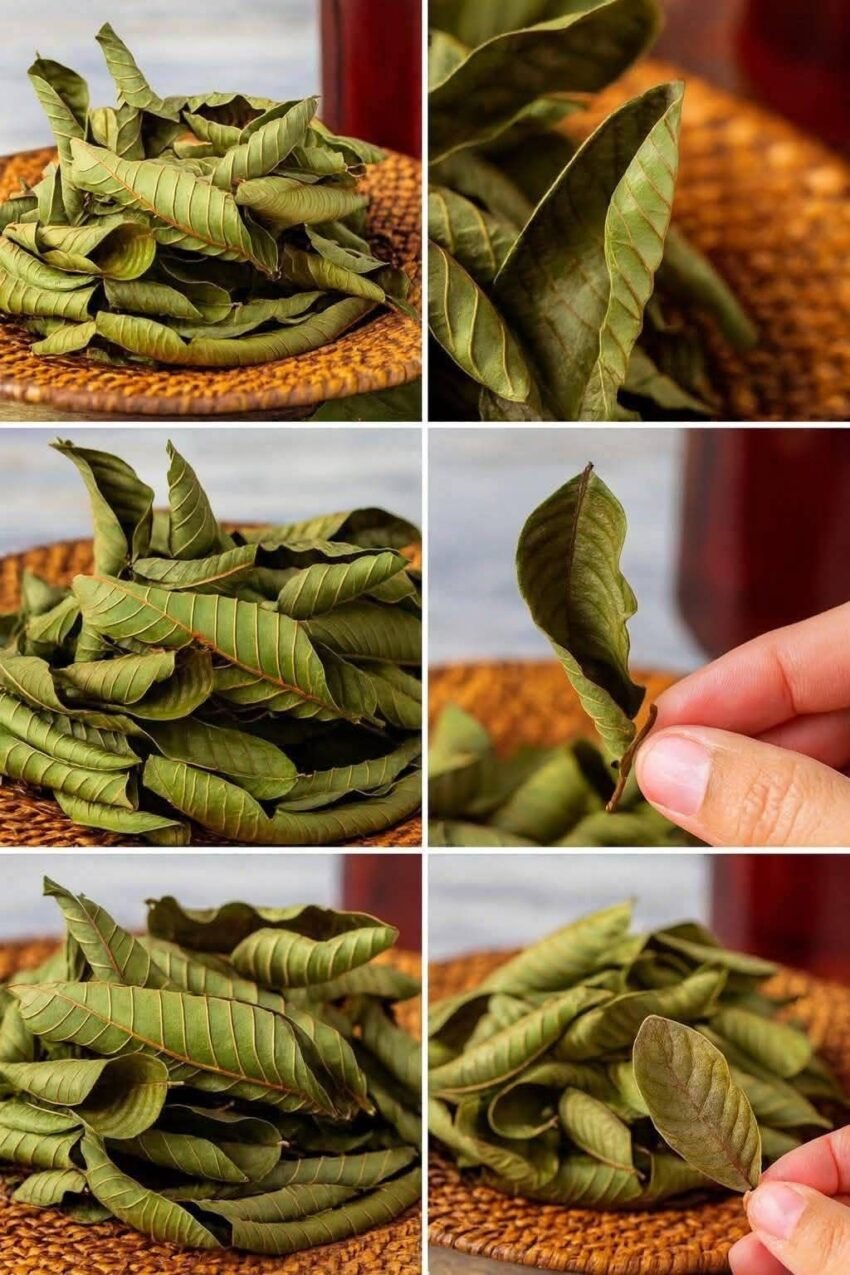
Guava leaves have been used for a long time in traditional medicine, but many people only know a small part of what they can do. Below is the “hidden secret” explained clearly, with full details and safe directions.
🌿 The Little-Known Power of Guava Leaves
Guava leaves (from Psidium guajava) are rich in natural compounds that protect the body and support everyday health.
Key Active Compounds (the real secret)
Guava leaves contain:
-
Flavonoids (especially quercetin) – reduce inflammation and fight harmful microbes
-
Tannins – help tighten tissues and reduce excessive secretions
-
Polyphenols – strong antioxidants that protect cells
-
Essential oils – give antibacterial and antifungal effects
These work together, which is why guava leaves are more powerful than many people realize.
🍃 What Guava Leaves Are Commonly Used For
1. Digestive support (diarrhea, bloating)
Guava leaves help:
-
Calm intestinal movement
-
Reduce harmful bacteria in the gut
-
Ease stomach cramps
Why it works: Tannins slow down excess fluid loss, while flavonoids fight bacteria.
2. Blood sugar support
Guava leaf compounds may:
-
Slow the absorption of sugar
-
Improve how the body uses insulin
This is why guava leaf tea is traditionally used after meals, not on an empty stomach.
3. Oral health (bad breath, gum issues)
They help:
-
Reduce mouth bacteria
-
Strengthen gums
-
Freshen breath
4. Skin and hair care
Guava leaves are used to:
-
Reduce acne-causing bacteria
-
Calm itchy or irritated skin
-
Strengthen hair roots and reduce dandruff
🍵 How to Prepare Guava Leaf Tea (Correct Direction)
Ingredients
-
5–10 fresh guava leaves or 1 tablespoon dried leaves
-
2–3 cups clean water
Directions
-
Wash the leaves thoroughly
-
Boil water and add the leaves
-
Simmer for 10–15 minutes
-
Strain and allow to cool slightly
-
Drink 1 cup, once or twice daily
⚠️ Do not exceed 2 cups per day unless advised by a healthcare professional.
🧴 External Use Directions
For skin or wounds
-
Boil guava leaves in water
-
Let it cool
-
Use the water to gently wash the area
For hair rinse
-
Boil a handful of leaves
-
Cool and strain
-
Use as a final rinse after shampooing
⚠️ Important Safety Notes
-
Not a replacement for medical treatment
-
Avoid excessive use
-
Pregnant or breastfeeding individuals should consult a healthcare professional
-
Stop use if any irritation occurs