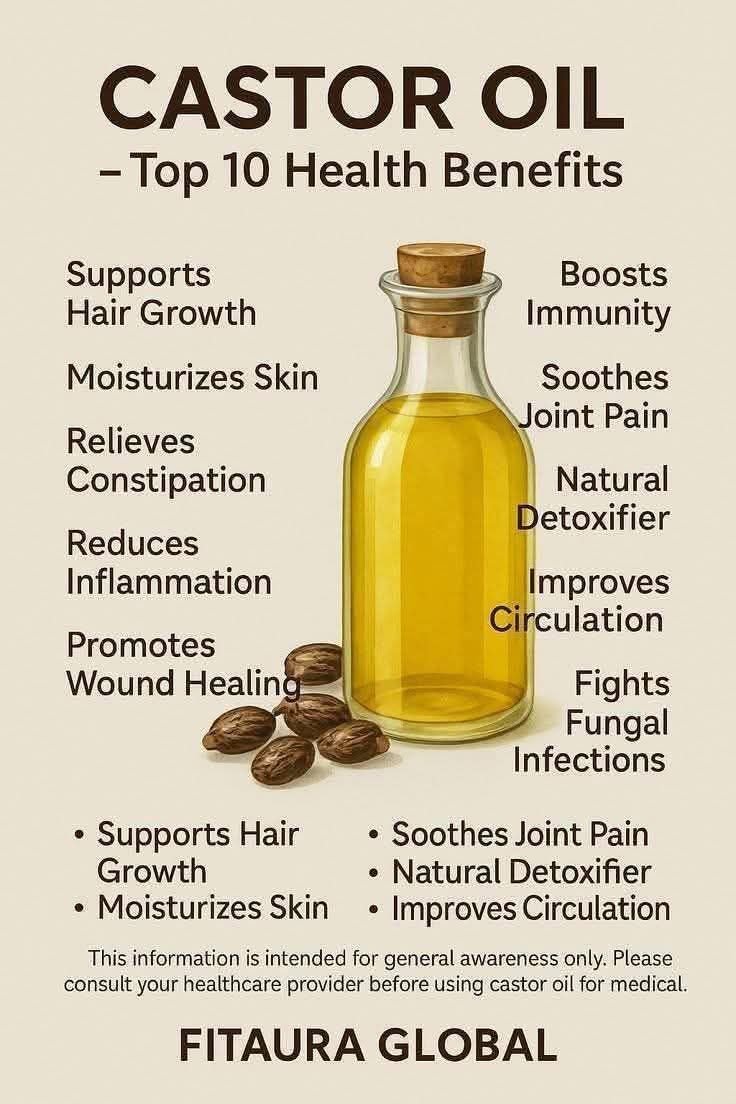
Castor Oil: Full Details and Benefits
Castor oil is a vegetable oil that comes from the seeds of the Ricinus communis plant. It has been used for centuries for various purposes, ranging from medicinal to cosmetic and industrial uses. Here’s a detailed look at castor oil’s benefits and directions for use.
What Is Castor Oil?
Castor oil is a pale yellow liquid extracted from castor beans, primarily grown in tropical areas. It’s rich in ricinoleic acid, a fatty acid that gives castor oil its unique properties. The oil has a distinct smell and is known for its thick, sticky consistency.
Types of Castor Oil:
-
Cold-pressed Castor Oil: This type is extracted without heat, retaining the highest nutrient content.
-
Refined Castor Oil: Extracted using heat and processing, removing some nutrients but making it suitable for use in industrial products.
-
Black Castor Oil: A type of castor oil that’s roasted and has a stronger odor. It’s typically used for hair growth and treatment.
Benefits of Castor Oil
1. Hair Care
-
Promotes Hair Growth: Castor oil is commonly used to stimulate hair growth. The ricinoleic acid in the oil improves circulation to the scalp, ensuring that hair follicles get the nutrients they need.
-
Conditioning: The oil acts as a natural moisturizer, hydrating dry and brittle hair.
-
Treating Dry Scalp: Castor oil helps to treat dandruff by reducing dryness and flakiness of the scalp.
-
Thicker Eyebrows & Lashes: Many people use castor oil on their eyebrows and eyelashes to promote growth.
Directions for Hair Use:
-
For Scalp & Hair Growth: Massage a small amount of castor oil directly onto your scalp. Leave it in for at least 30 minutes or overnight, then wash it out with shampoo.
-
For Eyebrows and Lashes: Use a clean mascara wand or cotton swab to apply a small amount to your brows or lashes before bed. Leave it overnight, then rinse it off in the morning.
2. Skin Care
-
Moisturizer: Castor oil is a natural moisturizer and is often used for dry skin, including rough patches like elbows and knees.
-
Acne Treatment: The anti-inflammatory properties of ricinoleic acid help reduce inflammation and acne breakouts by soothing the skin.
-
Wound Healing: Castor oil has antimicrobial properties that can help prevent infection in minor cuts, scrapes, and wounds. It also promotes tissue growth and healing.
Directions for Skin Use:
-
For Moisturizing: Apply a small amount of castor oil to your skin and massage it gently. It can be used on the face (in moderation), hands, and body.
-
For Acne: Apply a tiny amount directly onto acne-affected areas and leave it on overnight. You can mix it with a few drops of tea tree oil for added benefits.
3. Pain Relief
-
Joint & Muscle Pain: Castor oil has natural anti-inflammatory properties, which make it useful for soothing joint pain, arthritis, or sore muscles.
-
Menstrual Cramp Relief: Applying warm castor oil packs to the abdominal area can help reduce menstrual cramps.
Directions for Pain Relief:
-
For Joint Pain: Gently massage castor oil onto the affected area, or use a warm compress with castor oil on sore muscles or joints for 15-30 minutes.
-
For Menstrual Cramp Relief: Apply warm castor oil to your lower abdomen and use a heating pad or warm towel to soothe cramps.
4. Digestive Health
-
Laxative Effect: Castor oil is commonly used as a natural laxative to relieve constipation. It stimulates the bowel and helps clear out the digestive system.
Directions for Digestive Health:
-
For Constipation: Take 1–2 teaspoons of castor oil on an empty stomach (consult a doctor first for safe dosage and advice). It works within 6 hours. Note: This should be used sparingly and only for short-term relief.
5. Anti-Inflammatory and Antimicrobial Properties
-
Reduces Inflammation: Castor oil’s ricinoleic acid has been shown to reduce inflammation, making it helpful for conditions like arthritis or other inflammatory conditions.
-
Fights Fungal Infections: It has antimicrobial properties, which help in preventing infections, especially on the skin.
6. Natural Eyelash and Eyebrow Growth
-
As mentioned, castor oil is often used for enhancing eyelash and eyebrow growth due to its high ricinoleic acid content.
Precautions and Side Effects
-
Allergy Test: Always do a patch test before using castor oil, especially on sensitive skin, to ensure you don’t have an allergic reaction.
-
To test: Apply a small amount to your inner arm, wait 24 hours, and check for any redness or irritation.
-
-
Pregnancy and Breastfeeding: While castor oil is generally safe for most people, pregnant women should avoid using castor oil as it may stimulate labor. Consult a doctor before using it during pregnancy or breastfeeding.
-
Excessive Use as a Laxative: Overusing castor oil as a laxative can lead to dehydration and digestive problems, so it’s best to use it under medical supervision.
-
Eyes: Avoid getting castor oil in your eyes. It can cause irritation or blurry vision if it comes into contact with your eyes.
Summary:
-
Castor oil is a versatile natural oil with numerous benefits, particularly in hair care, skin care, pain relief, and even as a laxative.
-
For hair, it stimulates growth and helps with dryness. For skin, it moisturizes and can reduce acne or heal minor wounds.
-
Always do a patch test before use and be cautious with internal use, especially when using it as a laxative.